Showing posts with label Business Travel. Show all posts

Thursday, January 4, 2018

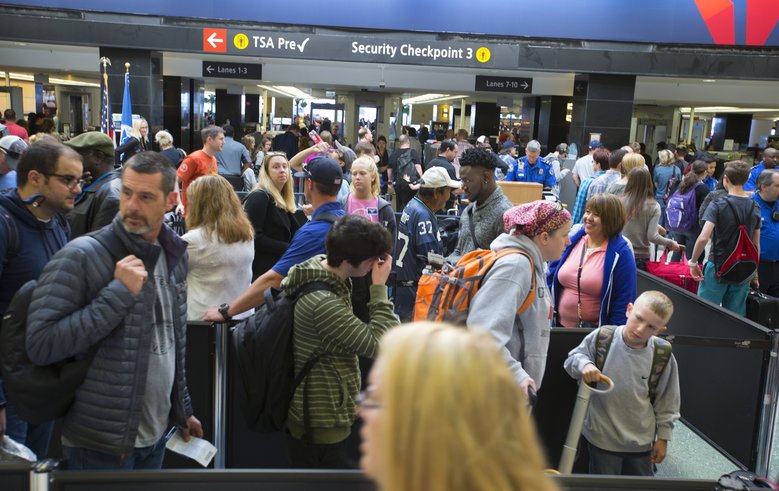
Moving Through Airport Security Quickly

Ever since homeland security has become such an issue, moving through airport security has become more difficult.  As a seasoned business traveler, this part of your business trip requires some savvy preparation and your knowledge of the system so you can sail through security at the airport as quickly as possible.  But the ability to navigate airport security quickly is not something that comes easy or without some significant planning and training.

The biggest problem of getting through security is not you, it’s the other people who did not come prepared for this process.  If you get stuck behind someone who is completely stumped by what is expected of them, it can take forever to get through the system.  So the first priority is to hit airport security when the crowds are low.  The easiest way to accomplish this is to take the first flight of the day out of that airline.  This will be the time when there are fewer people in the airport than anytime of the day.

Moving Through Airport Security Quickly


Usually it is only business travelers who are at the airport at six a.m. so they will be the ones that already know how to handle security and the lines will move much more quickly.  Like them, you have already learned the most recent rules about what will pass through security and what will get you stopped.  You will need your driver’s license and boarding pass several times as you move through the process.  So have that out early on and ready to show it often.  Don’t put that information away until you are on the other side of security and ready to go to the gate.  That one-step alone moves you along quickly through the different checkpoints of airport security.

Usually airport security uses a queuing system to handle the crowds.  That means that usually it is one long line moving up to the gates and then that line splits into several gates where various teams work the travelers through the scanning stations.  As you are standing in line to go through the gates, keep an eye on the different stations.  Some stations will stop more people or their equipment is too sensitive so it is moving slower.  You may notice that a new team has arrived and is preparing to open a new station.  With a bit of maneuvering in line, you can hit that new station as it opens and move through fast before the lines accumulate there.

This is also a place to do a bit of profiling.  While it is not ok for police to profile, you can look over the people ahead of you and profile those who will either be detained for scanning or will be a big problem when they are ready to put their stuff on the belts.  Certain ethnic groups might get scanned more often.  It’s sad but true.  We all want racial equality but if you can avoid being behind that person, you might get through security faster.  Also, avoid “amateur travelers” who have lots of kids, the elderly, people in wheelchairs or anyone who looks like they are confused by this process.  You can be a hero and help someone out if you have plenty of time.  But as the lines split up to go to the different stations, you can simply avoid being behind people who will slow up the process and go to the fast lines to get through more efficiently.

You can cut down on how much you get scanned before you get to the airport.  Wear slip-on shoes that you can get off quickly and back on quickly.  Boots and tie shoes just slow you down.  Keep the amount of “stuff” you are carrying through security to a minimum.  Put your wallet, keys and other pocket material in your briefcase or purse before you even get in line.  In that way you are down to shoes and that item to move through security and you can move more quickly.

These tricks of the trade can make the beginning of your business trip much less of a problem and get you to the gate more quickly.  The security personnel will appreciate that you know what you are doing and you will reduce your stress and move along to your business goals with less anxiety and a greater focus on your objectives.

Tuesday, January 2, 2018

Controlling Business Travel Costs

Sometimes when we are traveling on business, it is easy to let costs get out of control.  But if you are working from a per diem or have other constraints on your travel budget, you should learn some cost cutting methods that you can put into effect that won’t make your life miserable on the road.

These cost-cutting ideas are not just to stay out of trouble with the budget people back at the home office.  Often businesses have a set budget for business travel and once it is gone, no further trips can be made during that budget year.  So if you anticipate the need for more business trips in months ahead, it is prudent to keep an eye on costs as you go so you can conserve that limited budget to facilitate important trips yet to come.

Controlling Business Travel Costs


Economizing on the road can be difficult because you are put right in the middle of the hospitality industry which, while good at making you feel comfortable and providing for your needs, hotels and restaurants are also good at running up your tab.  But there are some easy ways to sidestep a lot of unnecessary spending so you can stretch your business travel budget.

* Eat before you go.  Airport restaurants or snack bars are notoriously overpriced.  So even if you are leaving early in the morning, have breakfast and get well satisfied before leaving home so you don’t have to buy food en route.

* Wise packing.  Think through your life in the hotel and on the road.  You can buy travel sizes of almost everything you will need.  Moreover, you can pack some light and easy to carry snacks such as trail mix, candy bars or nuts that can be used to tide you over during the trip until you can get a good meal.  By being self-dependent during the trip, you save a lot by not using airport services.

* A hotel is just a bed, a shower and a TV.  When booking your accommodations, think about where you should stay.  If you don’t need a luxury hotel, don’t book one.  If you are just staying the night in one place and then moving on, a clean, well run motel can take care of you just as well as the executive suite at the Hilton.

* Share that ride.  If you are traveling as a party or you are meeting business partners at the destination, you can share cabs or rental vehicles and save business costs as well as conserve on burring fossil fuels unnecessarily.

* Markets and delis.  You can even eat economically in a big town like New York or Orlando by using the same sense you have at home.  By taking an early trip to a nearby grocery, you can stock your room with fruits and travel foods and cut down on the amount of meals you have to eat out.

* Public transportation.  If the town you re traveling to has safe and workable subways or other public transpiration, that can be much more efficient for you than renting a car.  Washington DC for example has outstanding rail transport that you can use rather than rent a car.

By using some of the same good common sense you use at home to keep expenses under control for your home budget, you can not only live inexpensively on the road, you can actually live better.  And by not allowing yourself to be overcharged for some very basic goods and services, you will feel better about your business outing and become known in your company as a smart traveler.

Sunday, December 31, 2017

Are Travel Agents Obsolete?

It seems you cannot watch television for more than an hour without seeing an advertisement with William Shatner talking about Travelocity or that silly gnome talking about Orbitz.  These travel web sites have been very successful at facilitating travelers to book their own airline and hotel reservations online.  So with this huge push from the internet to take over the travel industry, one has to ask, “Are travel agents obsolete?”

If you have browsed some of these travel sites, you have observed that they are amazing in the diversity of travel options that they make available.  And it is impossible to deny that many thousands of people have taken advantage of these services.  As a business traveler, however, your needs are somewhat different than the typical airline passenger.

There are some very specific services that a living and breathing travel agent can provide that simply cannot be replicated by an automated web site like Travelocity or Orbitz.   Some of those services that a seasoned business traveler would be hard pressed to live without include…


Are Travel Agents Obsolete?


§ Focus.  You as a business traveler are not arranging this trip for entertainment.  You have specific business objectives in mind.  So if you must take time away from preparation for  your business task to worry about travel itineraries, hotel and rental car reservations and the like, that is time that you are not being productive for your business.  If you can call a talented travel agent who knows your travel profile well and delegate those arrangements to that agent, they do their job in finding just the right accommodations for you and you are freed to do what you do best, focus on your business and the upcoming business trip.

§ Economy.  It is difficult to find that balance between finding the accommodations that fit the demanding schedule of a businessperson on the road and is respectful of the companies travel budget as well.   If you use an automated online travel service, you may have to sacrifice convenience, schedule or location for economy.  A good travel agent will work hard to get you the right itinerary while getting as close the corporate travel cost restrictions as possible.  And they will do it without taking up a lot of your time.

§ Back up.  You don’t need help if your trip goes completely as planned.  But if you encounter problems on the road, you can find yourself in need or rescheduling flights and finding new accommodations to work around canceled flights, weather issues or other unexpected interruptions to your plans.  These travel disasters are not mindful of your tight deadlines to meet your business goals.  But if you have a travel agent who is dedicated to providing you service, he or she can find those alternative routes and resources to do all they can to get you to your destination so you can conduct your business on time.

§ That personal touch.  You may have travel preferences that you want to achieve with each trip you take.   A travel agent has your profile and your travel history so they can do what they can to accommodate your preferences.  But moreover, if you have specific special needs such as a diet limitation or a need for accommodation due to a disability, it will be a travel agent that sees to it that your needs are provided for and you are well taken care of on the road.

§ Complications.  If your travel itinerary involves making connections with other business partners who are traveling from diverse offices, complex travel schedules and itinerary challenges that just cannot be described to the generic screens of an online travel service, you can explain these complications to your travel agent and they can work with other travel agents working to organize the meeting and see to it that your itinerary meets your requirements.

While the online travel services do provide a valuable and affordable alternative to the general traveling public, it is easy to notice their limitations if you are trying to book a trip that is tricky or if you have specific needs that the screens do not anticipate.  That is why working with a human travel agent guarantees that this travel professional will dedicate themselves to the task of making sure your trip works to your specifications and that you get to your destination ready to conduct business and be successful in your achieving your goals.

A Corporate Travel Policy that Works

It is a myth that employees who travel on business resent the corporate travel policy.  The truth is that employees like to know what is expected of them and how to comply with a corporate policy as long as that policy is fair and gives them the ability to do what they need to do on the road.  So a well thought out corporate travel policy is a benefit to the company and the business traveler alike.

If it has been given to you to put together a corporate travel policy, your mission from the stand point of the company is to develop a policy that standardizes business expenses, eliminates waste and excess on the road and puts some controls around that part of the business expense picture.  So there are some definite focus areas you should include in the stated corporate policy including…


A Corporate Travel Policy that Works


* Reservations.  The business can utilize a travel agent that is looking for the best deal for the company.  The best rates can be identified and taken advantage of but only while making sure the business traveler’s needs and the business objective of the trip are satisfied.  Requiring that employees utilize the corporate travel agent again is not unfair and it clarifies for the employee how to handle the situation.

* Use of credit.  It is a bit of effort and expense to set up corporate credit cards that you can require your traveling employees to use.  But by trapping expenses to the corporate account, you can get a record of a most of the business expenses that the employee is incurring.  Many of the expenses of travel such as airline and hotel can be directly billed back to the company thus taking the issues out of the hands of the business traveler.

* Travel rewards.  If you have your corporate travel coordinated by an internal or external travel agency, corporate accounts with the major airlines can be established so the frequent flyer miles can be collected by the business.  As such, the business can redeem those miles and realize those benefits as a significant discount to apply against the travel budget.

* Per Diem.  Your corporate travel policy must communicate clearly to the traveling employee what their limits are for hotel, rental car and meals on the road.  You want to head off before it starts any tendency by the employee to go overboard with daily expenses.  This part of the policy should be reviewed annually to update to current costs.

* Reporting.   One of the chief complaints employees have about corporate travel policies are that the expense reporting system is cryptic and hard to fill out.  You will give the employee a standardized form that each traveler in the company must fill out to get reimbursed for expenses while traveling.  But review these forms and even design your own so the format is understandable and you have categories to cover all types of expenses the employee might encounter.
Along with these general categories, your corporate travel policies should include some leverage for employees who are faced with exceptional situations.  Room and food expenses can vary widely depending on where the employee must travel.  So you don’t want to set the hotel limit to $125 per night because it is reasonable to stay in a comfortable hotel for that rate in Lincoln Nebraska but enforce that same limitation for an employee who must do business in New York City. 

By creating a policy that in general protects the corporate budget but is also workable to employees who are about the company business, you will have a tool that will serve both company and employee interests and enable business travel to be what it was always intended to be – a productive, business focused activity that achieves the goals of the enterprise.